
Best Washer for a Large Family 2026: Capacity and Cycle Speed for Daily Loads
When you buy through the Amazon links on this page, we may earn a commission at no extra cost to you. Learn more
Last updated October 31, 2026
The best washer for a large family is the Kenmore 4.5 cu ft top load washer: its drum holds the daily volume of a household of five or six, and the Accela and Express Wash cycles shorten the wash so back-to-back loads keep moving. The LG WM4200HWA front load washer suits bigger households that want a 5.0 cu ft drum and a 1,300 rpm spin that cuts dryer time, and the Samsung WA52DG5530K1 washer and dryer pair fits families of seven or more who need the washer and dryer to keep pace together.
The best washers for a large family in 2026

Kenmore 4.5 cu ft top load washer
See on Amazon
LG WM4200HWA front load washer
See on Amazon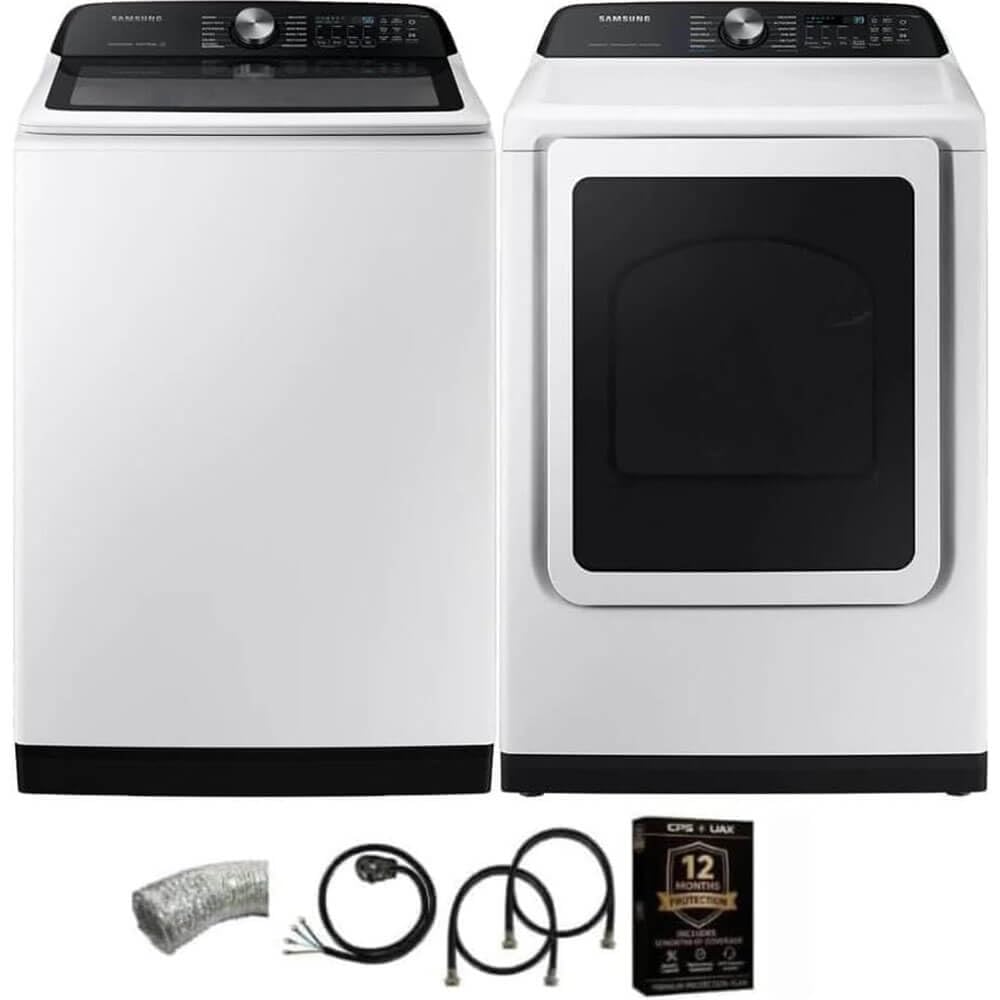
Samsung WA52DG5530K1 washer and dryer pair
See on AmazonModel comparison
| Model | Price | Rating | Capacity | Weight | Best for | |
|---|---|---|---|---|---|---|
| | Kenmore 4.5 cu ft top load washer | $1,099.99 as of 10/31 See on Amazon | ★ 4.2 (250+ ratings) | 4.5 cu ft | 125.7 lb | Households without room for a front loader get a 4.5 cubic feet top load drum with a Bulky cycle. |
| | LG WM4200HWA front load washer | $1,484.00 as of 10/31 See on Amazon | ★ 4.7 (4 ratings) | 5.0 cu ft | 201.5 lb | Allergy-conscious households washing comforters and sheets often get TurboWash 360°, Steam Wash, the Allergiene cycle and a 1,300 RPM spin. |
| | Samsung WA52DG5530K1 washer and dryer pair | $1,799.98 as of 10/31 See on Amazon | ★ 3.7 (4 ratings) | not stated | not stated | Households stepping up from an entry pair but keeping a top-load layout get a 5.2 cubic foot washer and 7.4 cubic foot dryer. |
Why oversized drums can wash worse for big households
A drum that is too big for the load is as much a problem as one that is too small. With too few items the impeller or the tumble action has nothing to rub against, clothes ball up, detergent is not distributed, and the spin can leave items wetter than a well-loaded smaller drum.
The practical rule is to fill the drum about half to three-quarters full, loosely, with room for clothes to turn over. For a large family this means the right drum is the one that is full at the family's normal load weight, not the biggest one on the shelf.
When several people's laundry goes in at once, sort by weight and soil rather than by owner. Heavy items such as jeans, towels and hoodies go together, light items go together, and the load stays balanced so the drum turns evenly. An unbalanced mixed load triggers re-balancing spins that add time and leave clothes damp.
Overloading the other way, stuffing a 5.5 cu ft drum to the top because it is there, blocks rinse water and detergent from reaching the middle of the load, and the machine's weight sensor cannot compensate. The result is detergent residue and gray whites, which is exactly the complaint large families bring to a bigger machine.
Bulky items need free volume to unfold. A drum that is nominally large but loaded with one comforter plus a week of towels will not clean either well, so give a comforter its own load with room to move.
Cycle time versus load size on back-to-back wash days
Cycle length scales with load weight and soil level. A normal cycle on a light load finishes well before the same cycle on a full family load, and heavy-duty or extra-rinse options add time on top. The number on the dial is a minimum, not a promise.
Fast-cycle options such as express, quick or speed-wash cycles are built for smaller, lightly soiled loads. They clean a full family load only if the load is genuinely full but not stuffed and the soil is ordinary. For heavily soiled kids' clothes, sports gear or workwear, the fast cycle trades cleaning for time.
Do the large-family math. At 10 loads a week, the difference between a 30-minute normal cycle and a 65-minute one is roughly six hours a week of machine time, enough to change whether laundry fits into a weekday evening or spills into the weekend.
The washer is only half the loop. A fast wash followed by a slow dry saves the household nothing. A high spin speed, and front-loads spin faster than top-loads, leaves less water in the clothes and shortens the dryer run, which is where the real time and energy savings sit for a household doing several loads a day.
Choose a machine whose normal cycle is short enough for daily use, and treat the express cycle as the tool for the small mid-week load, not the family's main wash.
Handling bedding, towels and bulky items in one load
A king comforter needs roughly 4.5 cu ft of drum to wash properly, and a queen needs a little less. Below that, the comforter cannot move and comes out half-clean and soaked.
The practical limit for a mixed bulky load is one comforter or a set of bedding or a stack of bath towels, not all three together. Towels are heavy when wet and dominate the load weight, so adding them to bedding unbalances the drum and forces extra spins.
Drum shape and door opening matter for bulky items. A front-load door limits how much you can push in at once but lets you slide a comforter in unfolded. A top-load lid means dropping items in from above, which suits big flat items but makes it harder to reach the bottom of a deep drum, and a deep tub can be awkward for shorter users.
For households washing bedding weekly, this is the section that justifies going above 4.5 cu ft: the extra volume is what lets a comforter and its sheets go in as one load instead of two.
Throughput per day for a household doing several loads
Estimate daily throughput as wash time plus dry time per load, multiplied by the number of loads, not wash time alone. A machine that washes a load in 30 minutes but pairs with a dryer that takes 60 minutes or more per load caps the household at roughly one load an hour, however fast the washer is.
Take a family running 10 loads a week on weekdays, about two loads an evening. At 30 minutes wash plus 60 minutes dry, two loads fit comfortably if the second load starts while the first dries. At 65 minutes wash plus 60 minutes dry, the same two loads run past bedtime.
Match or exceed the washer's capacity with the dryer. A 5.0 to 5.5 cu ft washer wants a 7.4 to 9.0 cu ft dryer, because a small dryer becomes the bottleneck the moment the washer gets bigger.
A washer-dryer combo washes well but dries slowly and cannot wash while drying, so for a household doing several loads a day it caps throughput rather than raising it. It is a space solution, not a volume solution.
Answer the rhythm question before buying: how many loads a day does the household actually run, and at what time of day. That, not the drum size, decides whether a fast washer changes anything.
Our picks by budget
The Kenmore 4.5 cu ft top load is our budget pick because it puts a drum big enough for a family of five or six, plus the Accela and Express Wash cycles, at the entry point of the range.
The LG WM4200HWA front load is our mid-range pick because the extra half cubic foot, the 1,300 rpm spin and TurboWash 360° shorten the dryer run, along with steam and app control.
The Samsung WA52DG5530K1 pair is our premium pick because the washer and dryer are matched, so the 7.4 cu ft sensor-dry dryer keeps up with the 5.2 cu ft drum instead of capping the household's throughput.
Budget
Mid-range
High-end
Which washer for which buyer profile
The right machine for a large family is the one whose drum matches the household's weekly pounds and whose cycle fits the time of day the laundry actually gets done.
Family of five or six on a budget
The 4.5 cu ft drum is sized to the household's daily volume, the Triple Action Impeller handles tough dirt, and the Accela and Express Wash cycles keep back-to-back loads moving.
Six or seven people, shortest dryer runs
The 5.0 cu ft drum takes bedding as one load, and the 1,300 rpm spin with TurboWash 360° leaves less water in the clothes so the dryer finishes sooner. Steam and the Allergiene cycle suit a house with allergy concerns.
Biggest capacity with a matched dryer
The 5.2 cu ft washer and 7.4 cu ft sensor-dry dryer keep pace as a pair, and app monitoring and cycle alerts suit a household running loads all day.
Our verdict on the best washer for a large family
For most large families the Kenmore 4.5 cu ft top load washer is our top pick: its 4.5 cu ft drum holds the daily volume of a household of five or six, and the Accela and Express Wash cycles keep back-to-back loads moving at the entry point of the range. The LG WM4200HWA front load washer suits bigger households that want a 5.0 cu ft drum, TurboWash 360°, a 1,300 rpm spin that shortens dryer time, plus steam, the Allergiene cycle and app control. The Samsung WA52DG5530K1 washer and dryer pair pairs a 5.2 cu ft washer with a 7.4 cu ft sensor-dry dryer, so throughput is not capped by the dryer. Match the drum to the household's weekly pounds and daily rhythm, not to the biggest number on the spec sheet.
Detailed model analysis
A drum that is full at the family's normal load weight cleans better than a bigger one run half-empty, and the spin speed decides how long the dryer runs afterward.
Kenmore 4.5 cu ft top load washer
The Kenmore 4.5 cu ft top load washer is built for speed. Its Accela Wash and Express Wash cycles shorten the wash, so one load can follow another.
The drum holds 4.5 cubic feet. Bulky, Heavy Duty, Towels and Whites cycles let you match the cycle to the pile instead of splitting it.
A Triple Action Impeller cleans three ways: spraying action with a concentrated detergent mix, a wash basket that moves back and forth, and an impeller that turns clothes in a circle.
It weighs 125.7 lb, lighter than the LG WM4200HWA front load washer at 201.5 lb. Controls combine a knob, touch buttons and an LED display. Detergent and fabric softener dispensers are built in.
The main limit is size. At 4.5 cubic feet, the drum is smaller than the 5.2 cubic feet of the Samsung WA52DG5530K1. The warranty is one year on the appliance.
It suits households that want a top loader with fast cycles and a Bulky setting, and can live with a smaller drum.
- Brand: Kenmore
- Capacity: 4.5 cu ft
- Loading type: Top load
- Dimensions: 30 in deep, 27 in wide and 44 in high
- Weight: 125.7 lb
- Wash cycles: 10 standard cycles
LG WM4200HWA front load washer
The LG WM4200HWA front load washer has a 5 cubic foot drum built for king-size bedding, towels and bulky loads. A drum this size cuts the number of cycles you run.
TurboWash 360° delivers faster cleaning times, and the maximum spin speed is 1,300 rpm. With 14 wash cycles, you can match the setting to the load. Steam Wash and the Allergiene cycle go after allergens.
A stainless steel drum and a 4 tray dispenser with Smart Grid round out the wash side. SmartThinQ Wi-Fi gives you remote control and cycle notifications, and it works with voice assistants.
It is ENERGY STAR certified, and a LoDecibel motor with vibration reduction is built for quiet running. A child safety lock is included.
It weighs 201.5 lb. With the door open it reaches 53.25 in deep, so plan for that clearance. The warranty is 1 year limited, and it is a washer only.
It suits households that wash a lot of bedding and want a big front load drum, a fast spin and remote control.
- Brand: LG
- Capacity: 5.0 cu ft
- Max spin speed: 1300 rpm
- Voltage: 120 V
- Dimensions: 33.25 in deep, 27 in wide and 39 in high
- Weight: 201.5 lb
Samsung WA52DG5530K1 washer and dryer pair
The Samsung WA52DG5530K1 is sold as a set, with a washer and an electric dryer in one purchase. The washer holds 5.2 cubic feet, and the dryer adds 7.4 cubic feet for comforters, towels and large family loads.
The washer is top load and high efficiency, so it uses less water and energy for everyday laundry. Its stainless steel tub resists chips and odors, and multiple cycles and temperature options cover delicates and heavy fabrics.
Sensor dry adjusts drying time automatically, which helps prevent overdrying and reduces energy use. The smart washer lets you monitor and control cycles through a compatible mobile device. Smart features are listed for the washer only.
Against the Kenmore 4.5 cu ft top load washer, the drum is 0.7 cubic feet bigger. If you want a front door, the LG WM4200HWA front load washer is the alternative.
The trade-off is space and setup: you need two machines to fit and a dryer vent to connect. It suits large families that want a top load washer and a dryer bought together.
- Brand: Samsung
- Washer capacity: 5.2 cu ft
- Dryer capacity: 7.4 cu ft
- Washer type: Top load
- Dryer power source: Electric
- Washer tub material: Stainless steel
Frequently asked questions
Capacity, comforter size, dryer pairing and installation clearance decide most large-family purchases before a single cycle runs.
How do I size a washer drum to a family of 5, 6 or 7?
Start from weekly pounds: six people generate roughly 90 to 120 pounds of laundry a week. A drum handles about 15 to 20 pounds well per load, so divide the weekly total by that range to get the number of loads the machine has to run. If that number of loads fits the days the household can wash, a 4.5 cu ft drum is enough; if it does not, move up to 5.0 cu ft or more, and check the drum's rated capacity in cubic feet against the weight of the family's heaviest single load. Seven people push the weekly total higher, so plan on the upper end of that range and check that the extra loads still fit the household's wash days.
When is a 4.5 cu ft drum too small for a family of five?
It is enough when laundry runs on most days and bedding gets its own load. It stops being enough once comforters, towels and a week of clothes all have to go in together, which is the point to move up to 5.0 cu ft or more. Five people usually land in the middle: a drum of that size works if the household keeps to a steady rhythm and gives bulky items their own cycle. A king comforter alone fills a drum of that size, so bedding has to run as a separate load.
How many loads a week does a large family do?
Most large households run 7 to 15 loads a week. The exact number depends on whether towels and bedding are washed weekly and whether sports gear or workwear adds loads.
Can a large-capacity washer wash a king comforter?
Yes, as long as the drum leaves the comforter free volume to unfold. Wash it on its own or with its sheets, never packed in with towels or a week of clothes, or it comes out half-clean and soaked. A front-load door makes it easier to slide the comforter in unfolded than a deep top-load tub.
Front-load or top-load for a big family?
Front-loads spin faster, leave less water in clothes and shorten the dryer run. Top-loads are easier to load, let you add items mid-cycle and suit households that prefer a lid. Both work at large-family volumes, so the choice is about dryer time versus loading convenience.
How big should the dryer be next to a large-capacity washer?
Size the dryer at or above the washer's drum, and check the dryer's capacity figure before you buy the pair. As a floor, a 4.5 cu ft washer needs a dryer of at least 7.0 cu ft, and a 5.0 to 5.5 cu ft washer needs 7.4 to 9.0 cu ft. Below that minimum the dryer becomes the bottleneck and the washer's speed stops mattering.
Are washer-dryer combos good for large families?
Generally no. A combo handles one load at a time from start to finish, so a household running several loads a day waits on each one. They suit tight spaces, not high volume.