
Best Washing Machine 2026: Top-Load or Front-Load for Your Home
When you buy through the Amazon links on this page, we may earn a commission at no extra cost to you. Learn more
Last updated October 31, 2026
The best washing machine for most households is the Black+Decker BFLW45M front-load washer: its 4.5 cu ft drum is sized for a full laundry load, it is ENERGY STAR certified, and it spins at up to 1300 RPM to cut dryer time. If you want a simple, budget-friendly top-load that stands up to heavy soil, the Kenmore 2629162 is the pick; if you are replacing both washer and dryer at once, the Samsung WA47CG3500K1 bundle pairs a 4.7 cu ft top-load washer with a 7.4 cu ft electric dryer.
The best washing machines of 2026

Black+Decker BFLW45M front load washer
See on Amazon
Kenmore 2629162 top load washer
See on Amazon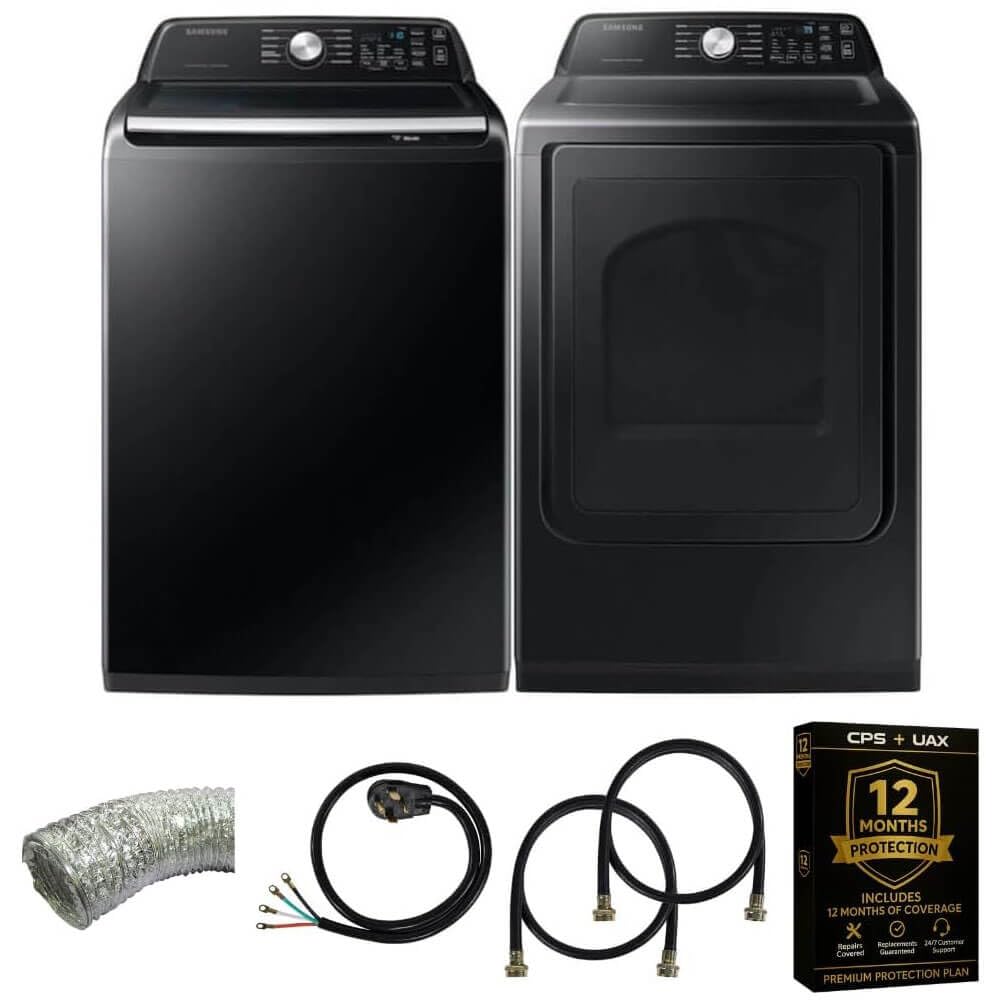
Samsung WA47CG3500K1 washer and dryer
See on AmazonModel comparison
| Model | Price | Rating | Capacity | Voltage | Weight | Best for | |
|---|---|---|---|---|---|---|---|
| | Black+Decker BFLW45M front load washer | $1,029.99 as of 10/31 See on Amazon | ★ 4.4 (9,300+ ratings) | 4.5 cu ft | 120 V | 216.1 lb | Queen comforter owners get a 4.5 cubic feet front load drum with a Bulky/Sheets cycle. |
| | Kenmore 2629162 top load washer | $899.99 as of 10/31 See on Amazon | ★ 4.5 (100+ ratings) | 4.4 cu ft | 110 V | 125.7 lb | Households with genuinely dirty laundry and a big drum want the widest cycle choice, which the triple-action agitator and 4.4 cu ft tub deliver. |
| | Samsung WA47CG3500K1 washer and dryer | $1,598.00 as of 10/31 See on Amazon | ★ 4.6 (50+ ratings) | not stated | not stated | not stated | Households replacing a washer and dryer together near living space want vibration reduction and top-load spinning that limits floor rumble. |
Will it fit? Dimensions, clearance and the delivery path
Full-size washers are about 27 inches wide. Measure the width, depth and height of the alcove, plus doorways, stairs and turns on the delivery route. Leave clearance behind for hookups (hoses and drain), a gap beside a paired dryer, and account for baseboards.
Door and lid clearance
A top-load washer needs room for the lid to open. A front-load washer needs room for the door swing. Check the standpipe height and drain requirements, and confirm the floor is solid, because vibration matters more on upper floors.
Water, power and hookups before you buy
Standard US washers run on 120 volts with a grounded three-prong plug, need hot and cold inlets and a drain standpipe. Confirm water pressure and drain rate are within the machine's stated range. Washer-dryer bundles add a 240-volt dryer circuit and a vent; check plug type (3- or 4-prong) and vent duct length. Portable and compact units have their own hookup rules (sink faucet, drain to sink or tub), so confirm the install before ordering.
What the yellow label says about running costs
ENERGY STAR certification means the machine beats the federal minimum on energy and water. The EnergyGuide label gives estimated annual kWh and cost. Water heating is a large share of a washer's energy use, so wash-temperature settings and a cold-wash habit matter more than most shoppers expect.
How the formats compare
Front-load is generally more efficient than top-load agitator; high-efficiency top-load sits between. Efficiency shows up as a small annual saving, not a dramatic one, so it should break ties, not drive the purchase.
Which wash programs earn their place on your machine
The everyday set is Normal/Colors, Quick Wash, Heavy Duty, Delicates, Bulky/Sheets, Rinse & Spin and Tub Clean. Sanitize requires an internal water heater to reach sanitizing temperatures, so check whether the machine has one rather than assuming the cycle name. Extra rinse, delay start and adjustable spin speed are the settings households actually use; a long list of specialty cycles is mostly marketing. Spin speed settings matter because a faster final spin cuts dryer time.
Maintenance habits that protect the machine
Leave the door or lid ajar between loads, wipe the front-load gasket, run a Tub Clean cycle monthly, and clean the filter and detergent drawer. Use HE detergent only in HE machines and measure it; overdosing is a leading cause of odors and residue. Don't overload: a loosely filled drum cleans better and lasts longer.
Capacity and drum size
Capacity is the single spec that decides whether a washer fits your household or quietly wastes your money. It is measured in cubic feet of drum volume, and the number on the label is the usable volume of the tub, not the size of the machine. A full-size front-loader typically runs 4.5 to 5.5 cubic feet, a full-size top-loader 4.5 to 5.5 cubic feet as well, and a compact unit 1.5 to 2.8 cubic feet. Those figures are not directly comparable across types, because an agitator eats into usable space and impeller top-loaders leave more of the drum free for clothes.
How cubic feet translate to actual loads
Manufacturers rate a load by weight, and the practical rule is that a drum holds roughly 1 pound of laundry per 0.1 cubic foot, so a 4.5 cubic foot washer handles about a 12 to 15 pound load when filled properly. In everyday terms, a 4.5 cubic foot drum takes a queen comforter, a 5.0 cubic foot drum takes a king comforter, and anything at or below 2.8 cubic feet will not fit a comforter at all. For bulky items, count towels and bedding rather than shirts: a large drum swallows a full set of bedding plus towels, while a compact drum handles a few days of clothes for one or two people.
Sizing the drum to your household
- One or two people: 3.5 to 4.2 cubic feet is enough. You will run smaller, more frequent loads and save water and energy per cycle.
- Three or four people: 4.5 to 5.0 cubic feet is the sweet spot. It absorbs a week of clothes plus the occasional comforter without forcing you to split loads.
- Five or more people, or heavy bedding and pet laundry: 5.0 to 5.5 cubic feet makes sense, but only if you will actually fill it.
- Small space, one or two people: a compact at 2.0 to 2.8 cubic feet works if you accept more frequent cycles and no comforters.
Why overbuying backfires
A drum that is too large for your household gets run half full, which wastes water, detergent and energy and can leave clothes less clean because there is not enough friction between items. Oversized drums also cost more upfront and take up more floor space, and the extra capacity buys you nothing if you never fill it. Match the drum to your weekly laundry volume, not to the biggest number on the shelf.
What to check on capacity before you buy
- Usable volume, not gross volume: compare the cubic feet figure across machines of the same type, and remember an agitator reduces what you can actually load.
- Door or lid opening: a large drum with a narrow opening still will not take a comforter easily. Check the opening diameter and the drum depth.
- Fill sensor and load-size settings: a machine that weighs the load and adjusts water automatically lets you run partial loads without penalty, which matters more than raw capacity.
- Physical footprint: confirm the machine fits your space with room behind for hoses and a gap beside a dryer, since a bigger drum usually means a deeper cabinet.
- Your actual laundry: count your heaviest weekly load, including bedding and towels, and size to that rather than to a hypothetical maximum.
If you are unsure, size one step above your typical weekly load and no further. That gives you room for bedding and the occasional big wash without paying for capacity you will never use.
Energy and water efficiency
Efficiency is where a washing machine's sticker price stops telling the whole story. Two machines that cost the same to buy can differ noticeably in utilities over a decade, and the gap comes down to how much electricity and hot water each one uses per load. The label, the certification and the spin speed together tell you what each machine will cost to own.
Start with the yellow EnergyGuide label
Every new washer sold in the US carries a yellow EnergyGuide label. It shows an estimated yearly energy use in kilowatt-hours (kWh) and an estimated yearly cost based on average use, so you can compare two machines side by side in the store. The number assumes a set number of loads per year and a set utility rate, so treat it as a comparison tool rather than a prediction of your bill. If you run more loads than average, scale the figure up.
What ENERGY STAR actually certifies
ENERGY STAR is a voluntary program run by the EPA. A washer earns the label only if it beats a federal minimum for energy use and meets a separate cap on water use per cycle, measured as water factor (gallons of water per cubic foot of capacity). Lower water factor is better. Certified models are typically front-loaders or high-efficiency top-loaders without a central agitator, because those designs use less water to begin with.
- Energy use: look at kWh per year on the label. A lower number means less electricity, mostly from heating water and spinning the drum.
- Water factor: the gallons used per cubic foot of tub capacity. A lower figure means a more water-thrifty machine for its size.
- Integrated modified energy factor: a single score that combines energy use, water use, and remaining moisture after the spin. Higher is better, and a strong spin matters because drier clothes mean less dryer time.
Why hot water dominates the bill
Most of a washer's energy goes to heating water, not to turning the drum. That is why the cycle you choose matters as much as the machine. A hot wash can use several times the energy of a cold one. Modern detergents are formulated for cold water, and cold cycles handle everyday soil well, so running most loads cold is the single biggest lever you control. Look for a machine with a true cold setting and, ideally, an internal water heater you can switch off, since some sanitize cycles rely on it.
Front-load versus top-load on efficiency
Front-loaders generally use less water per load because they tumble clothes through a shallow pool rather than submerging them, and their faster spin speeds extract more water, which shortens dryer time. High-efficiency top-loaders with an impeller close much of that gap and cost less to buy. Traditional agitator top-loaders use the most water and are the least efficient choice, though they can still make sense for heavily soiled loads. The running-cost difference between a good front-loader and a good high-efficiency top-loader is real but modest, so weigh it against purchase price, capacity, and how the machine fits your space.
How efficiency adds up over the life of the machine
A washer typically lasts around a decade. Over that span, the yearly energy and water figures on the label compound. Multiply the estimated yearly cost by the years you expect to keep the machine, then compare that total across the models on your shortlist. A machine that saves a little each year can close a purchase-price gap well before the end of its life, and one that saves a lot can pull ahead decisively. Factor in your local utility rates, since electricity and water prices vary widely by region, and check whether your utility offers a rebate for certified efficient models.
What to check before you buy
- Read the EnergyGuide label for yearly kWh and estimated cost, and compare it against at least two other models of similar capacity.
- Confirm the ENERGY STAR status and note the water factor if it is listed.
- Check the spin speed in revolutions per minute. Higher spin speeds remove more water and cut dryer energy use.
- Look for a cold wash option and an eco or efficiency cycle that adjusts water and temperature automatically.
- Match capacity to your household. An oversized machine run half full wastes water and energy, while an undersized one means more loads.
- Ask about utility rebates for efficient models in your area before you commit.
Efficiency will not make or break a purchase on its own, but it is one of the few specs that keeps paying you back every week. Use the label, the certification, and the spin speed together, and you will have a clear picture of what each machine will really cost you to own.
How loud each type runs
If your laundry room shares a wall with a bedroom, a living room, or a home office, noise matters as much as cleaning performance. Two machines with identical specs can differ wildly in how loud they run and how much they shake the floor. Here is what actually drives both, and what to check before you buy.
What makes a washer loud
Noise comes from three separate sources, and each is addressed differently.
- Wash and drain noise. The motor, the water splashing, and the drain pump all contribute. Front-loaders generally run quieter here because the drum sits horizontally and the load tumbles rather than agitates. Top-loaders with a central agitator are louder here, since the agitator slaps the load against the tub wall.
- Spin noise. The spin phase is the noisiest part of a cycle. Higher spin speeds extract more water (shorter drying) but generate more sound and more vibration. A washer spinning at 1,400 to 1,600 rpm will be noticeably louder than one topping out around 1,000 to 1,200 rpm.
- Vibration transmitted into the floor. This is the part people underestimate. An unbalanced load at high speed turns the machine into a low-frequency thumper that carries through joists into rooms far from the laundry. It is often more annoying than the airborne sound.
What to look for in the specs
- Suspension and balance system. Front-loaders hang the drum on springs and dampers, which absorbs motion well. Better machines add counterweights and advanced load-balancing that redistributes an uneven load before the spin ramps up. Top-loaders rely on a simpler suspension and are more prone to walking or banging when a heavy item clumps on one side.
- Insulation and sound-dampening. Some machines include acoustic insulation around the motor and drum, and a solid, sealed cabinet. If quiet operation is a priority, look for models that explicitly mention sound insulation or quiet packages rather than assuming all front-loaders are silent.
- Spin speed control. You want a machine that lets you dial the spin speed down. A high maximum spin is useful for towels, but being able to drop to a lower speed for a bedroom-adjacent laundry room is what makes the machine livable day to day.
- Decibel ratings. Where a manufacturer publishes wash and spin decibel figures, compare them directly. A difference of a few decibels is meaningful, since the scale is logarithmic.
- Build solidity. Heavier cabinets with a stable base vibrate less. A machine that feels rigid when you press on the corners is a better bet than one that flexes.
Installation matters as much as the machine
Even a quiet washer will thump if it is set up poorly. Check these before you blame the appliance.
- Level the machine. Adjust the feet until it sits flat and does not rock. This single step eliminates most vibration complaints.
- Remove shipping bolts. Front-loaders ship with bolts locking the drum. Leaving them in causes violent shaking. They must come out.
- Use an anti-vibration mat or pad. A rubber mat under the feet decouples the machine from a wood floor and cuts transmitted thumping noticeably.
- Check the floor. A concrete slab absorbs vibration; a suspended wood floor over a crawl space amplifies it. If your laundry sits on a weak wood floor, place the machine near a load-bearing wall or in a corner where the structure is stiffest.
- Leave clearance. Give the machine a little space on all sides so it does not knock against walls or cabinets during spin.
Matching the machine to your space
If the laundry room is next to where you sleep or relax, a front-loader with a strong balance system, adjustable spin speed, and sound insulation is usually the calmer choice. If quiet is not a concern and you want the simplest, most affordable option, a top-loader is fine, but expect more wash-phase noise and more sensitivity to unbalanced loads. Either way, budget for leveling and a vibration mat, since both cut the thumping that carries through floors.
What connected features actually add to a washer
Smart features are the easiest part of a washer to overpay for, so start by deciding what you actually want the machine to do that a plain control panel cannot. Most connected washers offer app control of settings, remote start, cycle notifications, and diagnostics that send fault codes to a technician. Each one has a real use case and a real catch, and the catch is usually in the fine print.
What each feature actually does
- App control and remote start. You set the cycle from your phone instead of the dial. Remote start almost always requires the door to be latched, the dispenser closed, and the machine to have been switched into a remote-enabled state at the panel first. That means you cannot load it and walk away unless you arm it before you leave.
- Cycle notifications. A push alert when the load finishes or the machine faults. Useful if your laundry is in a basement or garage, or if you run loads overnight and want to move clothes to the dryer promptly to limit wrinkles and odor.
- Diagnostics. The app reads error codes and can send them to a service center before a technician arrives. This can shorten a service call, but it does not replace the warranty process and it does not fix anything by itself.
- Voice assistant control. Convenient for starting or pausing a cycle, but limited to a short list of commands and dependent on the same remote-start conditions.
- Downloadable cycles. Extra specialty cycles you add later, such as a sanitize or activewear setting. Check whether these are free and permanent or tied to an account.
What to check before you pay for it
- Wi-Fi band and pairing. Confirm the machine works on the 2.4 GHz band, which most laundry rooms use, and that setup does not require a hub or a paid subscription.
- Account and data terms. Read what the app collects and whether core functions stop working if the manufacturer discontinues the app or you sell the machine. A washer should still run every cycle from its own panel if the network is down.
- Remote start conditions. Ask specifically whether remote start works when the door is open, and whether you must press a button on the machine to enable it each time. This is the single most common disappointment.
- Notification reliability. Look for reviews that mention missed or delayed alerts, and check whether alerts come through the app only or also by text or email.
- Diagnostics coverage. Confirm the diagnostic feature covers your model and that the service network in your area uses it. A code reader is only useful if the repair company reads it.
- Firmware and app support history. A brand with a long record of app updates is a safer bet than one that launched connectivity recently. Check the app store listing for the last update date and recent reviews.
- Smart home integration. If you want the washer to trigger a smart plug, a vent fan, or a dryer, verify the integration exists and works locally rather than only through the cloud.
When it is worth paying for
Connectivity earns its premium in a few concrete situations: a laundry room far from living space, a household that runs loads on a time-of-use electric rate and wants to schedule them, a rental or second home where you want fault alerts while away, and a home already built around one smart platform. It is also worth a modest premium if the same model adds a genuinely useful cycle or a better dispenser alongside the app.
Skip it when the machine sits next to your kitchen or bedroom, when you do not want another account and app on your phone, or when the connected version costs meaningfully more than an identical machine without it. In those cases put the money into capacity, spin speed, a heater for hot washes, or a better warranty instead. A washer's core job is cleaning and extracting water, and no app changes that.
One last check: confirm the smart features survive a power outage and a router change without a service visit, and that the machine keeps its last settings. If a salesperson cannot answer that, treat the connectivity as a bonus rather than a reason to buy.
How to weigh washer brands against price
Brand matters less than most shoppers think, but it matters in how often a machine needs a repair in its first years and how easy and cheap that repair is when it happens.
What brand reputation actually tells you
Large owner surveys are the most useful signal available, because they capture real failure rates across thousands of machines. The math is simple: a washer that fails in year four costs you a service call plus the hassle, and the savings from buying the cheapest model rarely cover it.
Reliability also varies by washer type, not just by brand. A brand with an excellent record on front-loaders may be mid-pack on agitator top-loaders, and compact machines have their own short list of dependable names. So check the reputation for the specific type and size you are buying, not the brand's overall reputation.
- Check the failure rate, not the star rating. Owner reviews skew toward people who just unboxed a machine. Survey data on repairs over the early years of ownership is far more telling.
- Match the brand to the type. Ask how that brand performs on front-load, high-efficiency top-load, agitator top-load, and compact models separately.
- Look at the common complaints. Odor and mold on front-loaders, tangling on impeller top-loaders, and vibration on compacts show up repeatedly across brands. A brand that has engineered around them is worth a premium.
Parts availability and service networks
This is the part shoppers skip and later regret. A machine is only as good as the technician who can fix it and the part that arrives in days rather than weeks.
- Ask who services the brand near you. Before you buy, search for authorized repair providers within a reasonable drive of your home. A brand with no local service means long waits and higher trip charges.
- Check part lead times. Common wear parts such as door boots, drain pumps, inlet valves, and control boards should be stocked domestically. If a brand has a reputation for back-ordered boards, factor that in.
- Confirm the warranty in writing. Most brands cover one year parts and labor, with longer coverage on the drum and motor. Note what is excluded and whether you must use an authorized servicer to keep coverage.
- Weigh the repair bill against replacement. Typical out-of-pocket repairs run in the low hundreds, and a service call fee alone can be a large share of that. On an older machine, a repair near half the purchase price is usually not worth it.
How to weigh brand against price
Price tiers track expected life more closely than brand names do. Budget top-loaders with plastic tubs and light-duty transmissions sit at the short end of that spread. Mid-priced machines sit in the middle of it. Premium machines built around heavier components last longest, but you pay for that up front and you should expect the brand to back it with a strong service network.
Our rule of thumb: set a budget, then within that budget buy the most reliable brand for your washer type that has local service and stocked parts. Do not stretch to a premium brand you cannot get repaired nearby, and do not chase a bargain on a brand with a weak record just to save a little at checkout. If two machines are close in price and reliability, let the deciding factors be cycle time, capacity for your largest load, and how easy the controls are to live with.
One more check before you commit: confirm the model is current and not a discontinued line. A discontinued machine can be a fine buy, but parts availability gets harder every year after it leaves the catalog.
Safety and common problems
Before you plug anything in, get the basics right. A washer combines water and electricity, which do not mix well. Most problems come from installation shortcuts or from a hose that was never checked, not from the machine itself.
Water and power safety
- Use a dedicated grounded outlet. The washer should have its own circuit, typically 15 or 20 amps at 120 volts for a standard model. Never use an extension cord, a power strip, or a cheater plug to reach an outlet.
- Keep the plug dry and reachable. Do not route the cord through standing water or under the machine where a leak can soak it. You should be able to unplug the washer without moving it.
- Install ground fault protection. If your laundry area is in a basement, garage, or anywhere near a sink, the outlet should be GFCI protected. Check it monthly with the check button on the outlet.
- Connect to both hot and cold supply. Match the hoses to the marked inlets. Reversed hoses cause poor cleaning and can trigger a temperature error.
- Use braided stainless steel hoses, not rubber. Replace any hose that shows bulging, cracking, or rust at the fittings, and replace hoses on a regular schedule. Burst hoses are the single most common cause of major water damage.
- Leave a gap behind the machine. Allow at least 4 to 6 inches for the hoses and cord so they are not pinched against the wall.
- Turn off the supply valves when you leave for more than a few days. It costs nothing and prevents a slow leak from running for days.
- Keep the area clear. Do not store flammable liquids, paint, or gasoline near the washer. Clean up lint and dust around the motor and cord.
- Supervise children and pets. Lock the control panel if your model offers it, and check the drum before loading.
Excessive vibration and walking
Some movement is normal, especially during the spin cycle. A machine that bangs, hops, or drifts across the floor is not.
- Remove the shipping bolts. Front-loaders ship with bolts locking the drum. If they were left in, the machine will shake violently. This is the most common cause of a new washer that vibrates.
- Level the machine. Place a spirit level on top, front to back and side to side. Adjust the leveling feet until it sits flat, then tighten the lock nuts against the cabinet.
- Check the floor. A weak or springy wood floor amplifies vibration. A stiffening brace or an anti-vibration mat can help, but the floor itself is the real fix.
- Balance the load. Mix large and small items instead of washing one heavy blanket alone. An unbalanced load triggers the machine to slow or stop the spin.
- Do not overload. Clothes should tumble freely. A packed drum strains the suspension and bearings.
Drainage problems
If the washer will not drain or spin, or water stands in the drum at the end of a cycle, work through these in order.
- Check the drain hose. It should loop up to at least 30 inches above the floor and no more than 96 inches, then go into a standpipe or laundry tub. A hose lying flat on the floor siphons water out during the cycle and can also stop the pump from priming.
- Clear the standpipe or sink trap. A clogged standpipe backs water up and looks like a washer fault.
- Clean the pump filter. Many front-loaders have a small access door at the bottom front. Put a shallow pan and towels down first, then unscrew the filter and remove coins, hair, and lint. Do this every few months.
- Inspect the drain hose for kinks. Pull the machine out and trace the full length of the hose.
- Listen to the pump. A humming pump with no water movement usually means a blockage. Silence means the pump or its circuit may have failed.
Leaks
Find the source before you run another load. Dry everything, run a short cycle, and watch.
- Hoses and connections: tighten fittings by hand plus a quarter turn. Check the rubber washers inside each coupling.
- Detergent drawer: too much detergent or the wrong type for a high-efficiency machine creates suds that overflow. Use only HE detergent and measure it.
- Door or lid seal: wipe the gasket and check for tears, grit, or hair. A front-loader door that does not latch fully will leak.
- Overloading and oversudsing: both push water past the seal. Run an extra rinse if you see suds on the glass.
- Internal leak: water under the machine with dry hoses points to a pump, tub seal, or internal hose. Unplug the machine and stop using it until it is repaired.
Error codes
Codes are the machine telling you what it detected. They are a starting point, not a diagnosis.
- Write the code down and look it up in your manual. The same letters mean different things across models, so check the manual for your machine.
- Try a reset first. Unplug the washer or trip its breaker for one minute, then restore power. Many codes clear if the cause was a temporary sensor glitch.
- Match the code to the symptom. Drain and spin codes usually point to a blocked filter or kinked hose. Fill codes point to closed supply valves, low water pressure, or a clogged inlet screen. Balance codes point to leveling or load distribution. Door lock codes point to a latch that is not engaging.
- Check the obvious before calling for service. Supply valves open, door latched, filter clean, load balanced, and the machine level. A large share of service calls end with one of these.
- Know when to stop. If a code returns after a reset and the machine will not drain, unplug it, shut off the water, and call a technician. Do not keep running cycles to see if it fixes itself.
One habit prevents most of this: check the hoses, clean the filter, and level the machine once a year. If you are still choosing between a top-load and a front-load design, keep in mind that front-loaders need more attention to their door seal and drain filter, while top-loaders are simpler to access but more prone to load imbalance.
Warranty and lifespan
Most washers carry a one-year warranty on parts and labor, and that first year is when coverage is most comprehensive. Beyond it, protection thins out fast and usually applies to specific components rather than the whole machine. Knowing what is covered, for how long, and what a repair realistically costs helps you decide whether to fix a machine or replace it.
What a typical warranty actually covers
- Year one: parts and labor on the whole machine. This is the period that matters most, because most manufacturing defects surface early in ownership.
- Years two through five or ten: parts only on the drum, motor, or transmission, with you paying labor. A failed motor in year four can still leave you with a sizable bill.
- Structural tub and cabinet: sometimes covered for the life of the machine, but only against cracking or leaking from the tub itself, not wear.
- What is almost never covered: cosmetic damage, mold and odor problems, clogged pumps from debris, damage from hard water or improper installation, and anything caused by using the wrong detergent.
Read the warranty document before you buy, not after something breaks. Check whether coverage is prorated, whether you need a proof of purchase and registration, whether in-home service is included, and whether the warranty transfers if you sell the machine. A long parts-only warranty on a motor sounds generous until you learn that labor to swap it can rival the cost of a basic new washer.
How long should a washer last?
A mainstream washer lasts about a decade, with a wide spread around that number. Entry-level top-loaders with plastic tubs and light-duty transmissions sit at the short end. Mid-range front-load and top-load models sit in the middle. Premium machines built around heavier components last longest, but you pay for that upfront and the electronics can still fail early.
Usage matters as much as build quality. A household running one load a day will wear out a machine far faster than one running three loads a week. Hard water, frequent hot washes, chronic overloading, and skipping cleaning cycles all shorten service life. Front-loaders that stay sealed and damp are prone to gasket mold, which is a maintenance failure rather than a defect and rarely covered.
Judging whether a repair is worth it
Use a simple rule: if the repair costs more than half the price of a comparable new machine, or if the washer is already past the halfway point of its expected life, replacement usually wins. A failed drain pump or lid switch on a younger machine is a straightforward fix. A failed control board or sealed transmission on an older machine is usually the signal to shop.
- Age of the machine: under five years, lean toward repair, especially if a major component is still under a parts warranty.
- Cost of the fix versus replacement: get a written estimate that includes the service call fee, parts, and labor before you commit.
- Frequency of breakdowns: one repair is normal. Repeated breakdowns point to a machine that will keep costing you.
- Efficiency: an older washer can use several times the water and energy of a current model, so a repair bill plus years of higher utility costs can exceed the price of a new machine.
- Parts availability: confirm the part is in stock and not discontinued before authorizing the work.
Ask about the service call fee up front, since many technicians charge for the visit whether or not you approve the repair. Get the diagnosis in writing, and ask whether the repair itself carries any warranty, because a replaced part often comes with its own short guarantee. If you are weighing a protection plan at checkout, compare its total cost and exclusions against the manufacturer warranty you already have, and remember that most plans exclude the same wear and maintenance issues the factory warranty does.
Our picks by budget
The Kenmore 2629162 is our budget pick because it delivers a full-size 4.4 cu ft top-load with a stainless drum and a practical cycle list for the lowest entry, with no smart features or sanitize cycle to pay for.
The Black+Decker BFLW45M is our mid-range pick because it adds ENERGY STAR efficiency, a sanitize cycle, five wash temperatures, five spin settings and a 1300 RPM spin in a freestanding front-load format.
The Samsung WA47CG3500K1 is our premium pick because you are buying a matched washer and dryer pair with sensor drying, Wi-Fi on both appliances, vibration reduction and the cords and vent included, not a more capable washer on its own.
Budget
Mid-range
High-end
Which washing machine for which buyer profile
Matching the machine to the load you wash most often matters more than the longest feature list.
Tight budget and heavy soil
The Kenmore 2629162 top-load washer handles work clothes, kids' clothes and bulky items with a triple-action agitator and simple controls. It suits renters and first homes that want a full-size machine without smart features or a sanitize cycle.
Efficiency and gentle care
The Black+Decker BFLW45M front-load washer is ENERGY STAR certified, has a sanitize cycle and spins at up to 1300 RPM to cut dryer time. It fits a freestanding laundry spot and is gentle on baby clothes and delicates.
Replacing both machines
The Samsung WA47CG3500K1 bundle pairs a 4.7 cu ft top-load washer with a 7.4 cu ft electric dryer, both Wi-Fi enabled, with sensor drying and the cords and vent included. It suits a family refreshing a full laundry pair in one purchase.
Our verdict on the best washing machine
For most households, the Black+Decker BFLW45M front-load washer is the best overall pick: it is ENERGY STAR certified, has a sanitize cycle and spins at up to 1300 RPM. The Kenmore 2629162 top-load washer is the best budget choice for simple, heavy-duty washing. The Samsung WA47CG3500K1 bundle is the best full-pair pick when both washer and dryer are due. In one line: front-load for efficiency and gentleness, top-load for budget and heavy soil, bundle when both machines are due. Measure the space and confirm hookups before ordering.
Detailed model analysis
Each pick is judged on how it handles the format question, fits a real laundry space and covers the cycles a household uses.
Black+Decker BFLW45M front load washer
The Black+Decker BFLW45M is a front loader with a 4.5 cu ft stainless steel drum that has room for bulky bedding. A Bulky/Sheets cycle is built in.
It spins at up to 1300 RPM, which helps cut dryer time. It is ENERGY STAR certified and offers 12 standard cycles, including Sanitize, Quick Wash, Baby Care and Tub Clean. MyCycle saves the program you use most.
Touch controls and an LED display run 5 wash temperature settings and 5 spin settings. Delay start goes up to 24 hours.
The main limit is bulk. It weighs 216.1 lb, which is 90.4 lb more than the Kenmore 2629162, and it measures 34 in deep, 27 in wide and 39.8 in high.
It takes HE detergent only. Setup needs a grounded 120 V outlet, hot and cold water at 10 to 120 psi, and a drain handling about 17 gal per minute (64.3 L per minute).
It suits households that want a front-load drum for comforters and sheets, and have the floor space and hookups ready.
- Brand: Black+Decker
- Capacity: 4.5 cu ft
- Voltage: 120 V
- Dimensions: 34 in deep, 27 in wide and 39 in high
- Weight: 216.1 lb
- Wash cycles: 12
Kenmore 2629162 top load washer
The Kenmore top load washer uses a Triple Action Agitator. Spraying works a concentrated detergent mix into the load, basket action moves the basket back and forth, and agitator action turns clothes in a circle.
That suits heavily soiled laundry. Accela Wash and Express Wash shorten cycles, and the 10 standard cycles include Cold Clean, Heavy Duty, Bulky, Towels, Whites and Delicates.
The 4.4 cu ft stainless steel drum takes clothes, bedding and other household fabrics. It is 0.1 cu ft under the Black+Decker BFLW45M front load washer. The Kenmore weighs 125.7 lb, which is 90.4 lb less.
Knob and touch controls sit beside an LED display. Noise is rated at 55 dB and it runs on 110 V. Two filters, a drain hose guide and a cable tie come with it.
The limits are plain. It is top load only, with no front access, and it offers 10 cycles against the 12 of the Black+Decker BFLW45M. The warranty is one year on the appliance.
We see it fitting households with dirty laundry that want a top-loader with knob and touch controls.
- Brand: Kenmore
- Capacity: 4.4 cu ft
- Dimensions: 30 in deep, 27 in wide and 44 in high
- Weight: 125.7 lb
- Voltage: 110 V
- Noise level: 55 dB
Samsung WA47CG3500K1 washer and dryer
The Samsung WA47CG3500K1 is a washer and dryer pair. The top-load washer holds 4.7 cu ft and uses vibration reduction technology for a quieter wash even at high spin speeds, which matters near living space.
A built-in WaterJet faucet pretreats stains in the tub, so you skip the sink. A self clean function keeps the drum fresh. Wi-Fi and SmartThings let you control and monitor cycles from your phone.
The 7.4 cu ft electric dryer has Sensor Dry, which stops the cycle when clothes reach optimal dryness. It also has a reversible door and Wi-Fi cycle alerts.
The bundle is ready to install. It includes hot and cold washer hoses, 3-prong and 4-prong dryer power cords, an 8-ft flexible aluminum vent duct and a 1-year CPS protection plan covering parts and labor.
Limits: the washer dispenser is single-compartment, detergent only. The dryer needs a 240V outlet and a 4 in vent connection.
It suits households replacing a washer and dryer together that want smart controls and a low-vibration top-load washer. Unlike the Kenmore 2629162 and the Black+Decker BFLW45M, it includes a dryer.
- Brand: Samsung
- Washer capacity: 4.7 cu ft
- Dryer capacity: 7.4 cu ft
- Washer loading: Top load
- Drum material: Stainless steel
- Color: Black
Frequently asked questions
Buyers often ask about format, capacity, hookups and care before they commit to a washer.
Do I need a water heater inside the washer for a sanitize cycle?
A sanitize cycle only reaches sanitizing temperatures if the machine has an internal water heater, so check the spec sheet rather than trusting the cycle name on the dial. Many washers list a Sanitize option without one, and those cycles run at whatever temperature your household hot water supplies. If sanitizing is a priority for your household, confirm the heater is listed and that you can switch it off when you just want an ordinary hot wash.
How long do washing machines last?
Roughly a decade with care. Budget machines sit at the short end, and maintenance habits (door ajar, tub clean, HE detergent) extend life.
Agitator or impeller top-load?
An agitator is strong on heavy soil and fast. An impeller leaves more usable drum space and is gentler but can tangle clothes.
Do I need HE detergent?
Yes for HE machines. Overdosing causes odors and residue, so measure the detergent.
What spin speed do I need?
A faster final spin extracts more water and cuts dryer time. Adjustable spin settings let you protect delicates.